top of page


4 LTC
Respect Oversight Advocacy Reform
for Long Term Care
a 501(c)(3) nonprofit organization
~ Ombudsman after screening "No Country
For Old People"
"It’s brutal. And it’s beautiful. Because it’s the truth."

Learning about people’s experiences of long-term care neglect and abuse helps us understand the many forms it can take and
lets us know we are not alone.
These stories are all true. We thank those who bravely told their story in the hope that they will help others who are being abused. We invite you to share your own story HERE.

Hannah's Story
Louisiana's Long-Term Care Crisis: How Greed, Understaffing, and a Failing Healthcare System Abandon the Elderly and Disabled
The following account reflects my experiences navigating Louisiana's healthcare system while caring for my father, who has vascular dementia, cardiac disease, and multiple complex medical conditions. Over the past several years, I have interacted with memory care facilities, skilled nursing facilities, hospitals, home health agencies, and hospice programs. What I witnessed repeatedly was a system that often appeared more focused on reimbursement, discharge metrics, occupancy rates, and cost containment than on providing compassionate, competent care.
This is not a scientific study, nor is it intended to be an indictment of every healthcare worker in Louisiana. I encountered many kind nurses, aides, therapists, and support staff who genuinely cared about my father. However, my overall experience led me to conclude that Louisiana's healthcare system routinely fails elderly and disabled patients with complex medical needs.
Most disturbing of all was the realization that the system often seems designed to manage decline rather than support longevity. Instead of helping elderly and disabled patients live as long and as well as possible, many healthcare institutions appear to prioritize moving patients quickly through the system while shifting the burden of care onto families.
***** Memory Care (2020) *****
After my mother died in early 2020, I became responsible for my father's care. He moved into a private-pay memory care facility that cost more than my monthly salary. I assumed that the extraordinary cost would translate into extraordinary care. I was wrong.
My father experienced repeated falls, yet staff continually offered excuses rather than solutions. At one point, I was told he was intentionally sleeping on the floor because he was "reverting to childhood." Only after I repeatedly complained was I permitted to enter the facility as an essential caregiver.
I quickly learned that expensive long-term care does not necessarily mean quality care. Private-pay facilities advertise extensive services, but when medical needs arise, many respond with the same explanation: "We're not a nursing home."
I witnessed residents suffering while staff claimed they were unable to administer medication or provide basic medical interventions. I filed multiple complaints with the state, two of which resulted in findings of noncompliance. Others did not.
One experience continues to haunt me. Another resident had two fractured hips and had reportedly gone two weeks without pain medication. She cried continuously. Staff members privately acknowledged how upsetting her suffering was, yet little seemed to change. I eventually called 911 in an attempt to get her help.
Then COVID-19 arrived.
The facility repeatedly assured me that no employees in memory care had COVID-19. Days later, residents were notified that the facility was under lockdown because of a positive case.
I repeatedly requested COVID testing for my father, who was clearly symptomatic. The facility delayed testing while insisting that no one had been exposed. Meanwhile, I was monitoring him remotely and could see that he was coughing, weak, and visibly ill.
When I finally removed him from the facility and took him to urgent care, he immediately tested positive.
Had I trusted the facility's assurances, I genuinely believe my father might have died there. Instead, I brought him home, arranged monoclonal antibody treatment, and ultimately watched him recover.
That experience permanently changed my view of long-term care.
People spend enormous amounts of time discussing the cost of long-term care and how families should financially prepare for it. What they rarely discuss is the uncomfortable reality that extremely expensive care often translates into surprisingly little actual care. In my experience, the system was willing to collect thousands of dollars every month while providing services that I frequently had to supplement myself. These experiences are described throughout my account.
***** Skilled Nursing Facility #1 (2023) *****
In 2023, my father was transferred from a hospital to a skilled nursing facility for short-term rehabilitation.
The contrast between what I expected and what I found was shocking.
He arrived in a nearly empty room containing a worn loveseat, an outdated bed without proper safety features, and food that was inappropriate for someone with congestive heart failure.
I was told that rehabilitation staff generally left by midafternoon and were unavailable on weekends. Supervisory personnel were often absent. When I expressed concern that my father would fall while trying to get out of bed, I was told that staff could place a mat on the floor.
I began spending nearly ten hours every day at the facility while simultaneously working remotely.
The more time I spent there, the more disturbing the environment became. I frequently heard residents calling for assistance and being ignored. Staff members openly stated that residents who needed assistance after certain hours might simply have to use a diaper because there would be no one available to help them.
I became increasingly concerned that the rehabilitation program was little more than a billing mechanism. Medicare covered the first twenty days of his stay, and despite my repeated requests to discharge him earlier, obstacles continually appeared.
Only after I spoke directly with a social worker did I learn that many of the explanations I had been given regarding discharge were inaccurate.
This experience reinforced a troubling conclusion: many nursing facilities are operating under financial incentives that do not always align with the best interests of patients. Families often believe they are sending loved ones to specialized rehabilitation centers, only to discover that they have been placed in understaffed nursing homes where rehabilitation may be secondary to reimbursement.
***** Hospitalization and Skilled Nursing Facility #2 (2024) *****
My father's second skilled nursing facility experience was catastrophic.
Following a hospitalization, he was transferred to another facility, where a nurse practitioner prescribed medication to control his persistent diarrhea.
I specifically warned staff that he had a history of fecal impaction.
I was assured it would not happen.
It did.
He developed a severe fecal impaction while simultaneously experiencing constant diarrhea and severe pain. He repeatedly begged for help, describing intense rectal pain. Blood appeared in his stool.
Despite obvious warning signs, I repeatedly received assurances that he was not impacted.
Eventually, another nurse became concerned enough to arrange transportation to the hospital.
There, physicians discovered a massive fecal impaction measuring approximately 9 × 9 × 9 centimeters. He required multiple blood transfusions.
What I witnessed over the following days was one of the most traumatic experiences of my life.
He remained in severe pain for days before the impaction was finally removed.
By the time he was discharged, my father had suffered permanent physical decline. He has never walked again.
In my opinion, what happened was not simply an isolated medical error. It reflected systemic failures involving understaffing, inadequate assessment, poor communication, and an apparent inability or unwillingness to provide basic bowel management.
When these failures occur in settings that continue receiving public funding through Medicare and Medicaid, families have every right to ask difficult questions about accountability and oversight.
***** Louisiana Healthcare: A System That Prioritizes Metrics Over Patients *****
Louisiana's healthcare market is dominated by a small number of major healthcare systems. My experiences led me to question whether modern healthcare incentives have shifted attention away from individualized patient care and toward financial and administrative metrics.
Repeatedly, I encountered pressure to discharge my father before he was medically stable.
Repeatedly, I was encouraged to consider hospice.
Repeatedly, I was forced to advocate for additional testing, additional treatment, and additional time.
At one point, I had to insist that physicians order an MRI after I noticed signs suggesting that my father might be experiencing a stroke.
I was also forced to identify a serious pressure injury that had either developed or worsened during hospitalization and skilled nursing care.
Again and again, I felt as though I was serving as my father's primary physician, nurse, case manager, and patient advocate while simultaneously caring for him around the clock.
No family member should be placed in that position.
Healthcare systems often speak about quality metrics, value-based care, reducing unnecessary hospitalizations, and improving outcomes. Yet families caring for elderly patients with dementia and multiple chronic illnesses frequently experience something entirely different.
Many of us are left wondering whether the goal is to help our loved ones recover or simply to move them through the system as quickly and inexpensively as possible.
***** The Pressure to Choose Hospice *****
My experience with hospice discussions was deeply troubling.
During one hospitalization, a physician initiated an end-of-life discussion almost immediately after meeting my father.
My father repeatedly expressed that he wanted treatment. Yet the conversation quickly shifted toward hospice.
I understand that hospice serves an important role for many families and that countless hospice professionals provide compassionate care. However, my experience led me to believe that hospice was sometimes presented as the preferred solution before all reasonable medical options had been explored.
More than eighteen months later, my father remains alive.
What ultimately improved his condition was not hospice. It was the implementation of consistent bowel management and hands-on care that addressed an underlying problem that had been repeatedly overlooked.
His laboratory values improved.
Hospitalizations stopped.
His overall condition stabilized.
These improvements fundamentally changed my perspective on the care elderly and disabled patients receive in Louisiana. Too often, I felt that the healthcare system focused on managing decline rather than supporting recovery or maximizing longevity.
***** Greed, Incentives, and the Value of Human Life *****
The most painful lesson I learned is that there is a profound disconnect between the cost of healthcare and the quality of care many elderly and disabled patients actually receive.
The long-term care industry is a multibillion-dollar business. Nursing homes, rehabilitation facilities, hospital systems, home health agencies, and hospice organizations all operate within financial structures that influence decision-making.
My experiences left me believing that financial incentives too often take precedence over patient care.
When facilities charge thousands of dollars each month while residents remain understaffed, neglected, or inadequately monitored, families are justified in asking whether profit has become more important than people.
When hospitals repeatedly attempt to discharge medically fragile patients before they are stable, families are justified in questioning whether financial and operational metrics are driving those decisions.
When elderly patients with multiple disabilities are repeatedly encouraged to accept less aggressive treatment without a thorough exploration of alternatives, families are justified in asking whether the system truly values their right to continue living.
The elderly and disabled deserve more than a system that simply manages decline.
They deserve competent medical care.
They deserve dignity.
They deserve aggressive treatment when they want it.
And they deserve the opportunity to live as long as possible.
My father's story convinced me that Louisiana's healthcare system often falls far short of those goals. Until meaningful reforms address understaffing, accountability, oversight, and the financial incentives embedded throughout long-term care, families will continue carrying an impossible burden.
No one should have to fight an entire healthcare system simply to ensure that a parent receives basic, humane care.
Yet that is exactly what I have spent the past several years doing. And I know I am not alone.
***** I was interviewed by reporter Kelli Maria Korducki from Business Insider regarding the situation caring for my dad:
https://www.businessinsider.com/millennial-daughters-boomer-parents-career-savings-penalty-2026-4
https://www.aol.com/articles/americas-biggest-career-hurdle-being-081301000.html
***** TO BE CONTINUED... *****
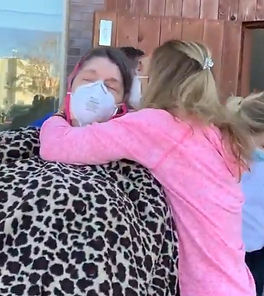
Georganne's Story
Georganne and her mother Gloria were featured in a story on NBC Denver 7:
Weighing What to do With Relatives in Senior Care During COVID-19 Spike
For months, families across the country were told the same thing: stay away.
Behind the doors of long-term care facilities, safety protocols meant isolation. No visitors. No touch. No hugs. For many, it was meant to protect life. But for some families, it began to feel like something else was slipping away.
Georganne knows that feeling all too well.
She remembers her mother Gloria as she used to be — smiling in photos, surrounded by family, celebrating birthdays with her sisters. “She’s very happy in these pictures,” Georganne recalls. Those moments, once ordinary, became painfully distant when COVID-19 restrictions took hold.
At 89 years old, Gloria was living in an assisted living facility when the shutdown began. What followed were months of separation — window visits, video calls, and the growing ache of distance. “I can’t hug my mom, I can’t touch my mom,” Georganne says. Eight months went by like that.
And something began to change.
Without regular human contact, without the stimulation of loved ones nearby, Georganne saw what she feared was decline. Not just physically, but cognitively. “I don’t think it’s healthy at all,” she says. “I think there’s a deterioration.”
For Georganne, the breaking point wasn’t just the isolation — it was the thought of how it might end.
“I do not want to be in a situation where I’m allowed into a memory care facility for the last few hours of her life,” she says. The idea of saying goodbye only at the very end, after months of separation, was something she couldn’t accept.
So she made a choice.
In the middle of a major COVID surge, Georganne decided to move her mother out of the facility and into a setting with fewer restrictions. It wasn’t easy. It meant hiring a caregiver. It meant accepting risk. But to her, the alternative felt worse.
“But she’s my mom,” Georganne says. “I want to be with her every second.”
The moment that followed made everything clear.
As Gloria was moved, mother and daughter embraced — finally sharing their first hug in over six months. A simple act, once taken for granted, now carried the weight of everything they had lost and everything they were fighting to reclaim.
“I feel grateful that I still have my mom,” Georganne says. “And I feel fortunate that I’m going to be able to take my mom and care for her and be with her… whatever time she has left.”
For families watching from the outside, her story raises a difficult question: what does it really mean to protect the people we love?
Because safety is more than avoiding illness. It’s presence. It’s touch. It’s connection.
And sometimes, the hardest decision is also the most human one — to bring them closer, no matter the risk.

Nancy's Story
I’m a very rare chronic illness warrior, a fierce advocate, and I have been in my nursing home since 2019. I will likely end up a tragedy at the pace and dangerously insidious manner in which retribution, neglect, and attrition for my advocacy and asserting and protecting residents rights (especially from illegal unsafe discharges and evictions, harm, or worse) is carried out 24/7 by leadership and most of my direct care staff, lawyers representing the nursing home, risk mitigation director, CFO, owners, corporate headquarters social service director, medical director, and HR, all the way down to maintenance, dietary, activities, and housekeeping managers, Director of Staff Development (groomer for shady practices and shortcuts, and cover ups), business office, medical records office manager and staff, and all of the receptionists, and Social Services. Directors of Social Services both here and at the corporate level are responsible for much of the day to day directing of harms and placating and deceit to keep residents submissive and silenced. It’s more than I can share so I’ll bring it to the present, this past week my belongings were boxed up and moved outside near the dumpster along with my personal furniture and it’s contents. Much of my belongings were thrown into the dumpster. I was tricked into going outside, then locked out where I spent the night. My medi-caid number was sold to a third party contractor (who has fraudulently billed Medi-Cal and me) by the medical director, had false diagnosis added to my medical records…again; and deleted these false diagnosis from my record. I don’t know that medical records are supposed to be altered or deleted, but I do know I’d like it to stop happening because it causes so much unnecessary trauma and hinders my ability to live freely and free from harms way, The nursing home chemically restrains residents so they cannot speak up to give any witness testimony and to isolate residents. They threaten anyone who they aren’t drugging with immediate discharge or discontinued health coverage; the Administrator told everyone they may not leave the facility alone at all…ever, and no one may leave for more than 4 hours and must have facility Drs approval written into the residents’ careplan, charts, and also submitted into the nursing home computer system. No one is allowed on a bus. Full stop, The exhaust tubing that blows very hot air, debris, and decades old build up of nursing home pollution dust and desert sand from portable A.C unit was pulled off of my room window joint to face me and my bed 24/7. I was not allowed access to my own closet and belongings for 7 months until I called the sheriffs dept, who then only took the word of the facility leadership and staff. The managers and staff have become the fall guys for the administrators and no one at all is taking any responsibility even though they’ve been heard stating “I know it’s wrong but what can I do, my bosses always retaliate. For instance, it’s common practice here to restrict residents movement by drugging and tilting them head down at a 45 degree angle for 4+ hours, which can cause death from cranial pressure. After a nurse was heard stating she knows it’s wrong but they’re taught to do that by DSD and supervisors in order to stop them from trying to get up at nighttime, the nurse said she knows it can kill people but can continue to do this tilting practice as can her CNAs under low blood pressure diagnosis. Luckily there are several open fraud investigations here at my facility. Also, there are plenty of witness statements. Also, these walls have ears, but it’s not only the facility that has ears anymore. That’s only a couple days of this past week. Imagine nearly 7 years of retaliation daily and strategically planned ways to force me out of my home where I receive necessary care? I didn’t even mention the cover ups and back stories that include falsified medical records and false documents, causing me to get sick, not allowing me to get to drs by intentionally not scheduling transportation to Dr appointments, refusal to assist with maintenance requests ie a new clean portable a.c., medications and e-kit not being filled, being given other people’s medications, monitoring and collecting restricted data and PHI and breaking privacy laws over company owned residents’, Visitors, and vendors public WiFi in order to have advantage for facility and corporation so they can CYA, to avoid scrutiny. Communications are deleted but never actually deleted. It’s time that digital forensics be done annually and not just during court orders. Why don’t residents hav3 an option to wear a wire inside nursing homes in common areas and with leadership who are directing all these harms and retaliation?
UPDATE 4/26/2026:
Just an update from my previous share. The administrator told me that if I keep continuing to take short outings, advocacy or not, my insurance will stop my care immediately. I was told I’d be asked to leave if I left for more that 4 hours. CANHR has already written a letter to my facility reminding them that residents are not prisoners, that we can leave on outings. We do not have to have permission from one of their doctors.
Also, Today I got a visit from the Director of Staff Development who, btw, has never spoken to me other than to say to me p that he is in support of CNA and Nursing staff wearing meta glasses while working, providing care, and in front of PHI. (Meta glasses aren’t HIPPA compliant) The DSD came in to tell me that the Medical Director will be coming to give me another physical on the 30th of April. In such a short amount of time since the last one? Odd. I’ll keep you posted on what he tries to do to retaliate on behalf of the company this time and I’ll also keep you posted on how he plans to patient dump me this time. I’d also like to make mention of the multiple times I’ve had to go to medical records to tell them that what is on my medical record and under diagnoses is not accurate; only to be told by medical records that they will go ahead and delete after not being able to find any documentation of a dr who falsely diagnosed me nor any record of what nurse input the false and undocumented diagnoses. And one more thing…after my recent public speaking BHSA event, it is VERY VERY VERY common for nursing homes from west coast to east coast, including mine, to dump residents. There are too many tactics and deceptions, and bamboozling lies that are used on residents and their loved ones in order for the nursing homes to patient dump to list, but maybe we should start a list and make it public! We need you out for an hour for deep cleaning, we have to paint your room, your insurance isn’t covering your care here, you don’t qualify for our services, we don’t provide or offer that kind of rehabilitation for your broken hip, your insurance doesn’t cover what you need, we have to move you to a different room, and the list goes on. Many times it will happen on a Friday, and they tell people to be out before Monday am or pay out of pocket, when there is no one to even speak to at the residents insurance companies even if the resident knew to ask insurance directly. I don’t know why advocates say it’s rare, when it most certainly is not and has not been as long as I’ve been an advocate.

Jonathan's Story
My story is different because of how we kept mom out a facility. I was already
talking to them and filling out applications in 2023. Then in August my mom
started TB006 because my brother became the first IRB-approved physician
in the FDA-approved Expanded Access Program. He is Dr. William Gael in NYC.
In three days after the first dose, mom said it felt like a cloud had lifted. After
four monthly doses, she started doing alterations at her sewing machine. So
I'm just about the luckiest caregiver in the world because mom still lives alone...
She care for herself and her cognitive is all there. So aside from getting my mom
back, I also told my brother to introduce me to the company that makes TB006
because mom doesn't need me everyday anymore. I just had my two year work
anniversary last December.
...So now I'm on a mission to get more caregivers a result like mine, and part of that
is just keeping the elderly in the home they want to live in for as long as possible.
I just uploaded two shots from the A4M conference at the JW Marriott-Downtown LA.
I can't send the video of his presentation because other patients are shown and that
would be a huge HIPPA violation. As you can imagine, he got a little overwhelmed with his
recovered mom in the audience watching him present her among his cases.
Not only did she dress and meet the Uber I sent on her own, but she also came
to dinner after the show. The next day, everyone in our group was talking
about the goodbye phase you always have when everyone is standing near
the host stand saying goodnight to each other. That's when mom said, "Oh, I
have to say goodnight to my new friends from Colorado." referring to my boss
and his wife. Apparently, everyone was blown away because she had only just
met them an hour earlier, proving that her short term memory was fine. Funny,
because it would not have even impressed me because I'm with her all the
time.

Rainy's Story
Hello, I want to let you know how much your documentary resignated with me. Susie, I am 35, almost and a former Resident Care Coordinator. I worked in a local Ohio ICF facility. Where I supported, and cared for some of the most sweetest, misunderstood, vulnerable, and just amazing individuals. Individuals who were placed in this facility due to developmental disability. Here in Ohio the Obudsman is not even able to advocate for the these individuals. Due too that advocacy being placed at the door of county Department of Disability, and State Department of Disability. CMS still goes in and surveys and give them a check mark though the neglect and abuse is clear. The Ohio Department of Health and Human Services has found non compliance of so many state regulations. From residents being stripped of dignity, made to urinate in their wheelchair on a depends. When they have complete ability to use the toilet. The RCC just didn't want to take the time to lift the resident appropriatly. My co-advocate has a uncle who has suffered with so many bed sores. The ODH placed in their survey that the Adminstrator and Director of nursing knew of no wound care specialist that was suppose to assess the sores. Also they had no proper training. Latest news. Was this poor man 71 years old, had a g-tube misplacement where one of the nurses place the peg tube at a 8cm depth 5 more cm than the 3 that the physician ordered. This blocked off his lower intestine causing blood bile and stomach contents to come up through esophagus. For 3 days this went on. Until he went the hospital, just find that a nurse after the insert was wrong still did not check placement, but blew up the balloon more. This just caused those worsened problems. Though this all happened and we have also my co-advocate and I have contacted the DODD, Corporate, CMS, the OAG, and the governors office. We have come to see just what you out on that documentary.
Susie, I am going to school for social work. Because I have rocked the boat, and I left as an RCC in April due to my co-worker being fired because her another RCC witnessed a senior employee male, in bed with a female resident and smacking the female naked bum. The Admin, hid the situation by firing the reporters and then telling the authorities, there was no malicious intent. That this man was often the only one who could get this individual out of bed. With no wondering or question about what that was. This was covered up entirely.
If you can point me in any direction of national advocacy groups, I would love to be apart of the voice. Also I am not longer aloud to visit my adult friends who I care so much for. Though this is restricting their rights. Nothing is done I mean nothing. Its very sad!
You reached me so well with this Doc. Thank you thank you.
~ Rainy *****; November 12, 2025

Diane's Story
In honor of my mom who in a long term care facility, dementia and amputee. Her prosthesis was forced on to her knee, shattering it, despite my inservice on how to put it on. Nursing home denied the one aide who I continually found to do it incorrectly was the one who forced it on. State was called in by me to investigate and they were fined. Didn’t help my mom who couldn’t walk again and developed health issues from being bed bound. Sadly passed soon after. In her honor I have become a long term care ombudsman, did it in NY, PA, and now CT. There but for the grace of God go I, or any of us, tighter oversight badly needed.thank you Suzie singer Carter for being a powerful voice!

Theresa's Story
My mother was diagnosed with dementia in 2019. She was not only my mother, but also my best friend. Unfortunately, I was not her Power of Attorney, so the important decisions regarding her care were not mine to make. In 2021, my brother made the decision to place her in a memory care facility, even though this was something my mother had clearly stated she never wanted while she was still mentally healthy.
Although my mother had documented her wishes and I had copies of her paperwork, I was not fully informed or prepared for what dementia would eventually require. No one truly expects their parent to decline in that way or need such extensive care. Looking back, I wish I had gone through her end-of-life documents more carefully and asked more questions while I still could.
From the moment she entered the facility, I noticed serious problems and many red flags. As I tried to help advocate for her, I repeatedly voiced concerns and filed complaints. After only three months, I was restricted from entering the memory care unit and was only allowed supervised visits with my mother in the front area of the facility.
About a year after she was placed there, my mother suffered third-degree burns on the bottoms of both feet. The facility had an outdoor courtyard easily accessible to residents. On an extremely hot day, there was reportedly only one staff member assigned to memory care. After being outside for an extended period of time, my mother stood up and collapsed. Thankfully another staff member eventually found her before something even worse happened.
Ironically, after this incident my visitation restrictions were lifted. It was then decided that she needed to be moved to another facility, but there was a one-year waiting list. She was eventually transferred, but only 3 weeks later she passed away. I truly believe the trauma and neglect contributed heavily to her rapid decline.
We later sued the original facility and won. However, no settlement changes the fact that my mother is gone. I believe she suffered neglect not only from the facility, but also from poor decisions made within my own family. My relationship with my siblings has never recovered. I was the oldest child and the one closest to my mother. I knew her wishes, her fears, and what she would have wanted regarding her care.
It deeply hurts knowing she was mistreated during the most vulnerable time of her life. All I ever wanted was for her to receive the dignity, compassion, and quality care she deserved.

Lisa B's Story
My dad was in three different memory care facilities in a mere 9 months. The first one was terrible, with staff and a director who clearly knew little about dealing with late-moderate stage Alzheimer's. My dad soon developed agitation (which he hadn't had previously) and their response was to send him to a geri-psych unit to dope him up. That's when we moved him to the second place. Staff was kinder, but the hygiene was severely lacking. A fall that broke 9 ribs sent him to the hospital and rehab, and during those 4 weeks, a room opened up at the facility that had been our #1 choice all along. We excitedly moved him there, thinking he'd live out the rest of his days with compassionate care. By the second day, a nurse was already responding to him with negative tones. On his sixth night there, our video camera captured him falling out of bed around 3 am. He lay on the cold, hard floor for a half-hour before a CNA discovered. Without attending to see if he was hurt (he was still nursing 9 broken ribs!), she summoned the nurse -- that same one who clearly didn't like him. My dad continued to lie on that floor for about 20 minutes -- no pillow or blanket offered -- while the nurse and CNA mocked him and spoke harshly to and about him! A third staff member finally came and they placed my dad awkwardly on the bed at a diagonal angle, legs dangling off the side of the bed; and he lay that way alone until the EMTs came 20 minutes later! When we confronted the facility director about this abuse, we were assured that the nurse would be reprimanded. My dad went from there to the hospital and then a SNF, where he died within a week. I contacted the board in charge of the abusive facility, and one of the board members facilitated a call between that horrible nurse (who was still working there) and me. Not only did that nurse not offer condolences for my father's passing, but her "apology" was followed by her justification, saying "He had slapped his pills out of my hand earlier that day."

Stephanie's Story
I am a ROARior because the whole country needs to address the way our culture "deals with" the elderly! They are not expendable! They are not disposable! They are our living ancestors, and we MUST protect them!!!
Below is my story as posted on the front page of a three-page cover story of the Sarasota Herald Tribune.
A few days every week, Stephanie Sifrit finds herself standing on the sidewalk along the 6000 block of Cortez Road in Bradenton waving signs outside a short-term rehabilitation center as cars zoom past.
The signs convey varying messages like "We need law now, yes to cameras," while the other side lists a Manatee County civil court case number along with the words: "86-year-old sexually assaulted, need cameras now."
Sifrit is advocating to have a law passed in Florida that would give families and guardians the right to place video cameras inside the rooms of their elderly and cognitively impaired loved ones living in nursing homes and assisted living facilities to help prevent elder abuse.
"I'm here to be an advocate for patients who cannot tell someone that they were physically touched or handled or mishandled," Sifrit said.
For Sifrit, the cause is personal.
In 2021, her 86-year-old mother, Janet Smith, lived at Bradenton Health Care for a month between Feb. 15 and March 11 following a brief stint at a local hospital, according to Sifrit and court records in a civil lawsuit she filed against the facility.
The lawsuit alleges that around March 4, Smith suffered unexplained and severe bruising to her private areas, as well as internal trauma that was later discovered during a visual pelvic exam. Smith also suffered bruising and swelling to her right temple, forearm and other parts of her body.
At the time, the facility's staff told Sifrit and her father, Smith's husband, that Smith had "self-reported a fall during the night.”
Sifrit said in an email that her mother had endured dementia and Alzheimer's disease since 2012 that was so severe at the time that Smith didn't know who she was and couldn't remember what had happened two minutes earlier, let alone what happened hours prior.
Sifrit said she had wanted to place a camera in the room initially and even called ahead of her mother's stay about it, but was denied three separate times by the facility's staff.
When Sifrit tried to bring her mother home early, she was told she would need to pay a $6,000 self-pay bill, as her mother's stay at the facility was mandated as part of her rehab following her hospital stay.
While the facility was known as Bradenton Health Care while Sifrit's mom was there, it has since changed its name to Aspire at Palma Sola Bay. The organization named in the lawsuit is 6305 Cortez Road West Operations, LLC, which was doing business as Bradenton Health Care.
The business 6305 Cortex Road West Operations, LLC remains as an active entity on according to state business records on the site SunBiz, and its principal address is listed as 6305 Cortez Road W.
The Herald-Tribune left a message at the office of the facility's attorney, Antonio A. Cifuentes, seeking comment but no response was received by the time of publication.
"Defense counsel in this instance forced the plaintiff into a pre-suit mediation given the seriousness of the allegation and defense counsel's pre-suit investigation showing no confirmation on the part of law enforcement, DCF or physicians of the alleged assault," court records from the defense said.
Additionally, the defense said in response to the lawsuit that Sifrit's counsel does not understand the significance of insurance coverage under the facility's general liability policy, according to court records.
"Not satisfied with the information she has been provided on insurance coverage, plaintiff's counsel is now inappropriately using this Court to amplify her attempts to harass and intimidate this defendant on matters related to insurance coverage," court records from the defense said.
Elder abuse under-reported
Elder abuse isn't as uncommon as many might think. According to the Area Agency on Aging for Southwest Florida's website, it's estimated that one in 10 Americans over the age of 60 have experienced some form of elder abuse, but only one out of every 14 cases of abuse is reported.
Sarah Gualco, director of programs and planning with the Area Agency on Aging for Southwest Florida, said that those numbers are most likely higher now since the statistics are from 2018 and there has been an increase in the 60-and-over population since that time.
Michael Brevda, a managing partner at Senior Justice Law Firm, which solely focuses on elder abuse and neglect lawsuits and accepts hundreds of cases annually, said for families who don't live in the same area, having a camera in their loved one's room could grant peace of mind.
"In Florida, most nursing homes refused to allow that, [yet some do] and the claim is that it might violate HIPAA by filming another patient or it would violate the privacy of the staff," Brevda said.
Brevda explained a simple solution would be to have facilities ask staff to sign a consent form upon hiring and acknowledge that there will be cameras in the rooms. The form could also be a way to address Florida's two-party consent law, which states that all parties must give consent before being recorded.
Brevda added that as long as the camera is visible and only pointing at the resident's bed and doesn't capture other residents or private areas such as bathrooms, he doesn't see the harm in a camera being used.
It's also an extra set of eyes to watch vulnerable patients, Brevda said, with families able to check in throughout the day and night to see what's going on with their loved ones.
"I think it's worth mentioning that too often when we prosecute a nursing negligence case here in Florida the records are either suspiciously silent as to what happened to the resident, or they directly contradict what other records state," Brevda said.
Placing a camera in a patient's room could not only help families with neglect or abuse cases, but it could also be a preventative measure.
Added safety
Sifrit added that while her father was in Brookdale Pointe West, a long-term care facility in Bradenton, there was a camera in his room that caught him tripping over his oxygen cord. Sifrit was able to alert staff to his fall and have peace of mind in knowing that the injury wasn't caused by mistreatment.
"On the other hand, the cameras don't only, you know, catch bad people doing bad things, cameras can help others support the facility if something comes up," Sifirt said. "Working in those facilities is extremely demanding and they can’t be there in every room to monitor everything."
Following Smith's traumatic experience, Sifrit moved her mom to Brookdale Pointe West, where she could have a monitoring device in her mom's room. Her mother would stay there until her death on March 2, 2022.
Brookdale Senior Living is one of the country's largest senior housing operators with over 60,000 residents and over 670 communities across 41 states.
“Brookdale Senior Living allows residents and/or their legal representatives the use of electronic monitoring devices in accordance with Brookdale policy and in compliance with State law," a Brookdale spokesperson said.
John O'Sullivan, executive director at Brookdale Gardens, said that his facility authorizes camera monitors inside rooms, but voice monitoring isn't allowed due to federal health privacy regulations. Brookdale Gardens and Brookdale Pointe West are two different long-term care facilities in Bradenton owned by Brookdale Senior Living.
The usage of cameras in the 120-bed facility is common, O'Sullivan added. For many families, the camera usage is not only to monitor the safety of their loved ones but also to connect with them virtually through video calls.
A 2019 study from the University of Washington surveyed 273 staff members from nursing home facilities across 39 states on the perceived risks and benefits of in-room cameras.
Of the 273 staff members surveyed, 172 wrote that the privacy of residents would be inappropriately invaded, and many extended those concerns to roommates, staff and visitors. This referenced intimate activities including bathing and using the bathroom.
Thirty-two respondents said that the use of cameras on staff had the potential to demoralize, offend, stress and show a lack of confidence in staff.
“Respondents noted that such invasion of privacy undermines a home-like experience, and others likened it to processes of institutionalization,” the study said.
While the policies of implementing camera monitoring devices vary from state to state and even facility to facility, O'Sullivan said that he hasn't received any complaints from his staff regarding cameras and that residents need to consent to the camera usage. If a resident is cognitively impaired, the power of attorney document would allow a designated individual to make those decisions on the resident's behalf.
The most commonly raised advantage in the study by 111 respondents was the use of cameras to deter abuse or determine the truth in abuse or theft allegations.
In Florida, agencies like the Florida Department of Aging Affairs, Area Agencies on Aging, and Adult Protective services under the Florida Department of Children and Families work to help prevent elder abuse or investigate when it occurs.
Gualco said the Area Agency's role is to help educate seniors and caregivers about the different areas of elder abuse, demonstrate preventative measures against the abuse and also try to help seniors remain at home for as long as possible. Gualco explained that there are five commonly identified areas of abuse which include physical, emotional or psychological, financial, sexual and neglect.
Other states allow cameras in nursing homes
Sifrit's efforts to pass the bill are aimed at preventing others from having to go through what her family has gone through.
She's also not alone in her efforts. Similar laws allowing cameras in nursing homes have been passed in nine other states, including Illinois, Kansas, Louisiana, Minnesota, New Mexico, Oklahoma, Texas and Washington.
In Ohio, Steve Piskor was successful in getting Esther's Law passed in 2022. The law, named for his mother who had Alzheimer's disease, went into effect almost a decade after Piskor placed a hidden camera in his 78-year-old mother's nursing home room in 2011 capturing proof that she was being physically abused by staff. Two nurse assistants ultimately ended up pleading guilty to the abuse, according to reporting by CantonRep.com.
Esther's Law requires that nursing homes and assisted living facilities allow the families of patients to place monitoring devices, either video cameras, audio recorders or both, in their loved one's room.
Piskor also echoed the sentiment that the cameras aren't supposed to be used for "I gotcha moments" but rather as preventative measures to stop abuse from happening. He is all for facilities informing employees of the cameras by placing signs up warning them there are cameras recording in certain rooms.
Now, the 68-year-old retiree works on helping other advocates in different states to get similar laws passed. He's currently helping advocates in Wisconsin and Sifrit in Florida. He said the key to getting laws passed despite opposition is to know all the details to answer any questions from the opposition about what you're hoping to get passed and applicable privacy laws.
The hope is that one day there will be a federal law so that all states allow families the right to place cameras.
Sifrit has met with Manatee County Republican state lawmakers Sen. Jim Boyd and Rep. Will Robinson, the chair of the Florida House of Representatives’ Civil Justice Subcommittee, about the usage of monitoring devices in long-term care facilities. She said that they were both compassionate, understanding and sympathetic to her experience.
Sifrit pointed out that Florida was on the path toward passing a measure similar to Esther's Law last year with SB 1486 which was sponsored by Florida Senator Travis Hutson, but the bill died in the Health Policy Committee in May 2023.
If it had passed, it would have authorized residents or their representatives to install and use an electronic monitoring device in the resident's room in long-term care facilities and would have prohibited facilities from denying a person that right, discharging them or otherwise discriminating or retaliating against the resident for installing a camera, according to the bill's description. It would also have provided a criminal penalty for unlawfully obstructing, tampering with or destroying the monitoring device.
"I cannot rest until facilities that house cognitively impaired patients have given the undeniable right to the family, to the caretaker, the healthcare surrogate to have a watchful eye over them [the residents]," Sifrit said.

Lisa's Story
My mother’s name was Linda Sestito. She entered Magnolia Manor in Columbus Georgia for a hip replacement and never made it out alive. She was just 69 years young. Mom had 4 falls during her time at this facility. After fall number three she was found unresponsive in her wheelchair the next morning and sent to er. Staff did not tell hospital about her fall. During this hospital stay they determined mom needed neck surgery. She was returned to Magnolia Manor to await this procedure. During this time she had fall number four from her wheelchair. Nurses heard her screaming from her room, entered and found her laying on the floor at the foot of her bed. They picked her up, looked her over, and out her in bed. I received a voicemail saying she had fallen but did not hit her head and was not injured in any way. Even though mom was awaiting neck surgery and was on blood thinners they did not send her to the er to be checked out. That night nursing notes show Mom was screaming 8/10 neck pain. Still not sent to Dr just medicated. This continued until 4 days after her fall when Mom began screaming and crying she couldn’t see, was unable to sit up in the bed, started saying things that didn’t make sense.. this was all documented and ignored for hours. Finally Mom had a full blown seizure, became unable to formulate words, and went blind. The nurse called a NON emergency transport for a “sick” person and again denied any falls. Doctors in the hospital spent days trying to figure out why she was bleeding into her brain. Mom never spoke again. Mom suffered a horrible death screaming blindly for 14 long torturous days until she suffocated on end of life secretions. All of this is documented in her medical records, voicemails, transport calls, and hospital forms. The photos of her feet show the level of care she was receiving. These pictures were taken when she was in the hospital. I reported her death and neglect to the state, the attorney general, the local police department, the city council, the congressman, the mayor , and the ombudsman. Nothing was done and no one was ever held accountable. Mom died 5/31/2021. I started an advocacy group on Facebook called Magnolia Manor Georgia Victims Fighting for Change after discovering mom was not their first victim. All documents and medical records can be seen in my group, along with hundreds of horror stories from other employees, and victims of this facility.

Edwin's Story
I am the Vice President of the Resident Council and live in a nursing home that is owned by a group of attorneys that care more about the money then the care of the residents of the facilities they own since they own multiple facilities. They also have an administrator here that is unqualified for the position and avoids conflict with residents, staff, and families of residents. She hides in her office most of the time. We also have a head of activities that was hired as a favor due to the former administrator who happens to have a 5% managerial ownership in this facility which guarantees her a position here regardless her qualifications, She has also destroyed are wonderful activities department and we no longer have many fun activities anymore. Most of what we now have are geared toward 4-5 year old children. Our menu has also been the same for 4 years now and has not been changed even though federal regulations state it must be changed frequently and they don't care and this has even been reported to the health department and nothing gets done about this. The food is even served cold and tasteless and sometimes undercooked and served on dirty dishes and this is also reported to the health department and still nothing changes because the administration and ownership tells the resident they are looking into it and working on it and nothing ever changes because they refuse to fix any of the problems for any reasons.

Sandi's Story
ODOA Town Hall Speech September 5, 2025 Oxford, Ohio September 5, 2025
In 2021, I was the only medical professional to testify for Esther’s Law cameras in LTC, using my experience as a nursing home employee. I was a mandated reporter and explained to House Representatives abuse, neglect and noncompliance of state and federal laws are not being followed since staff are afraid to file complaints, they are rarely substantiated and risk of job loss is too great.
The award winning, Long Term Care Quality Navigator tool is applauded as a breakthru movement for improving care in nursing homes. It has no benefit for vulnerable residents who are placed in 1 Star facilities by Ohio social workers. Fines totaling $600,000 are just the cost of doing business. No big deal. The Navigator benefits the wealthy who are able to afford a 4-5 Star facility.
Governor DeWine appointed 20 members to The Nursing Home Quality and Accountability Task Force with very impressive credentials, Executive Directors and CEO’s representing industry groups like nursing home owners.
On Sept 2, the Ohio Supreme Court delivered a win to nursing home operators saying Ohio Medicaid incorrectly calculated payments for high quality facilities. The lawsuit alleged that high quality centers were getting short changed on the incentive payments. The industry definitely has a voice to make things happen in their favor.
On the other hand …
If you study surveys, many facilities are not documenting data like UTI’s, pressure ulcers, falls, etc which determine incentive payments and star ratings. Ever wonder why a resident has a significant injury but the facility will not transfer them to the hospital?
Licensed nurses and administrators sometimes dictate what goes in a medical record protecting the facility. I have a survey where a floor nurse admitted she was told by a supervisor “not to document” an incident in a resident’s medical record that could potentially substantiate a complaint or lawsuit.
The ODH has the authority to report such unprofessional conduct of licensed professionals to Licensing Boards and the Attorney General for further investigation, yet seldom do so.
My research discovered anyone can file a report against a nurse or Administrator by going online to the perspective licensing board.
Most residents and staff cannot upload videos and photos or documentation from medical records to file complaints. I have called the DOH twice and was given information by intake specialists that Ohio is a one consent law state which means anyone could secretly record statements by staff substantiating injuries or events which frequently are not documented in a resident’s medical record. Yet, this is not mentioned in the Ohio Dept of Health Complaint Guide.
If I had this knowledge during the pandemic when facilities were shut down, I would have recorded every conversation I had with charge nurses, the Social Worker, ADON, DON and ADM who condoned abuse of a resident by making her live on the filthy tile floor since she was non ambulatory and a fall risk if seated in a wheel chair. I was told by the ADM I was not a mandated reporter and it was the resident’s choice to be on the floor. No documentation existed in her medical record to substantiate my complaint to the DOH.
According to an article published on March 31, 2025 by Journalist Brenda Ordonez, “Per the Butler Co Clerk of Courts there are at least 3 active wrongful death lawsuits against defendants: Majestic Care of Fairfield, Majestic Care, and other affiliates.” Cameras, cameras, cameras told the true story how two elderly ladies suffered prior to their death.
“Centers for Medicare and Medicaid Services has a plan at increasing the number of nurses working in NH’s and the number of state agencies that inspect nursing homes to ultimately improve protecting resident’s health and safety.” Your tax dollars may soon be paying $40,000 RN tuition reimbursement to get one nurse back in LTC. Your tax dollars may soon be paying for additional inspectors to look for documentation that does not exist to substantiate non compliance and abuse, yet facilities will continue to benefit and receive millions in incentive rewards while your loved ones suffer.
Caring staff will return to care for your loved ones in Ohio when consumers demand true and accurate transparency promised by Governor DeWine’s Nursing Home Quality and Accountability Task Force.
Rewarding the practice of undocumented evidence of violence, murder, noncompliance, Resident Right violations with millions of tax payer dollars to greedy nursing home operators is the transparency government officials continue to avoid taking responsibility for.
Consumers with real life experience in LTC deserve a seat on the board to be the voice for all residents since the nursing home industry has a powerful voice.
Please focus your immediate goals to empower mandated reporters with the ability to protect, allowing residents to live with respect and dignity in LTC and Assisted Living facilities in Ohio.
If you need to file a complaint, I have information that may help hold the facility accountable. I also have instructions how to easily locate surveys on the LTC Navigator.
Respectfully,
SK RN (Retired)
Nursing Home Quality and Accountability Task Force Members:
Members of this task force have authority, available resources, and public approval necessary to have a positive impact on residents residing in long-term care facilities in Ohio.
My personal experience working in LTC will explain my deep interest in supporting the goals of The Nursing Home Task Force.
In 2020, I tried to protect residents during the pandemic and have extensive documentation supporting my failed effort to protect Alzheimer's residents. Members who have not experienced conditions in LTC or reviewed current surveys are incapable of comprehending the reality that exists today.
I shared my experience working at a private pay LTC facility and testified during the hearings to help pass Esther’s Law.
I would like to make the following suggestions based on my experience working as a nurse for 46 years. Information quoted from recent surveys of a Special Focus Facility in Cincinnati will leave no doubt in your mind, that many residents and their families continue to be exploited. Surveys will never begin to convey the deep level of despair many residents feel on a daily basis. You will not hear a resident crying, begging for “water” or a resident screaming for help for an hour because he fell out of bed (his call light needed repair), or “Sandi, I don’t want to want to live this way.”
Enabling Excellence
In 1987, The Nursing Reform Act was initiated due to poor living conditions in nursing homes. The goal of the act was to ensure seniors in nursing homes receive high-quality of care. Surveys are conducted to ensure facilities are reaching those standards adopted almost 40 years ago. Yet abuse and neglect remain an ongoing issue. The Task Force must ensure existing laws and regulations are enforced or revised to protect residents.
Federal regulation enforcement options in some situations provide measures to impose temporary monitoring by state government authorities until deficiencies are remedied. Residents would see immediate improvements in care if temporary placement of Interim State Surveyors were placed in facilities with continued ongoing violations and noncompliance. This would send a strong message to all employees, complacent leadership practices are no longer acceptable or tolerated. Change the culture by educating staff, by example. Some staff may have never worked in a facility that demonstrated quality care. Many staff tend to “mirror” what they see.
In many LTC environments, residents have become an “unwanted task” no longer shown respect or treated as humans. Often the quality of care offered to residents depends on the motivation and expectations of management. If their main agenda is career advancement and increased profit for owners, residents will never be a priority in that facility.
Page 2
The following excerpts are quoted directly from state surveys (2022-2023) of a Special Focus Facility (SFF) also a CMS Abuse Citation Facility in Cincinnati, Ohio. This is a brief summary describing how these residents live on a daily basis. Pay scrutiny to the role of management in these surveys. Several suggestions are based on these recent state surveys.
Astoria Place of Cincinnati, Ohio Survey Date 3-7-2023 (Pages 1-8 of the survey )
Level of Harm Immediate Jeopardy
Resident #59 exited the locked facility at 10:45 pm “Found the following morning at 9:30 am sitting on a bench at a busy intersection 4.7 miles away. Temperature was 28 degrees with wind chill 25 degrees.”
Level of Harm Immediate Jeopardy
“Resident #41 left facility and walked 1.8 miles, found by police at 1:45 am temperature was 39 degrees with wind chill 34.”
Astoria Place of Cincinnati, Ohio Survey Date 4-12-2023 (Refer to page 5 of survey)
Level of Harm Immediate Jeopardy
“This resulted in Immediate Jeopardy on 3-8-2023 Resident #57 was found to have his fingernails grown into his palm, forming an abscess, subsequently sent to the hospital and found to be severely septic (severe infection) and diagnosed with tenosynovitis (inflammation of a tendon) of the right middle finger and gas gangrene (highly lethal infection) necrotizing fasciitis (a rare bacterial infection that spreads quickly in the body and can cause death) of the right middle finger. Resident #57 required emergency amputation of his right third middle finger and partial amputation of his right 5th finger. Additionally, the facility failed to provide adequate nail care for dependent residents #50 and #56.”
Astoria Place of Cincinnati, Ohio Survey Date 5-11-2023 (Refer to page 3 of survey)
On 5-2-23 “During the interview, LPN #132 was asked why the specifics of the incident with Resident #10, including the resident accessing and ingestion of the medications were not documented in Resident #10’s medical record. The LPN replied administration told her not to chart about it. A telephone interview on 5-3-2023 at 3:35 with Medical Director #410 reported Resident #10 resided on a locked unit due to her lack of safety awareness and drug seeking use.”
*Resident was sent to the ER for an overdose.
“At approximately 9:50 pm Resident #10 exited the secured unit thru an alarmed basement door without staff’s knowledge. After exiting the facility, Resident #10 wheeled herself up an exterior wheel chair ramp, across the facilities parking lot and into a dimly lit, busy, curvy two-way street where resident #10 had fallen out of her wheelchair and on to the street when a motorist
Page 3
discovered the resident. The facility identified 10 residents currently residing in the facility at risk for elopement.
Astoria Place of Cincinnati, Ohio Survey Date 7-25-2023 (Refer to pages 6 -7 of survey)
“Review of facility SRI tracking number 236341, created 6-23-2023 revealed the facility reported an injury of unknown origin/source to the State Agency. The SRI noted Resident #25 fell from bed on 6-9-2023, landed on her left side, and was discovered as having a fractured left hip on 6-21-2023. The SRI was marked as completed on 6-29-2023 and the allegations were unsubstantiated as evidence was inconclusive.” Later in the survey, “An attempted interview on 7-13-2023 at 11 am with DON (Director of Nurses) revealed the DON refused to participate in an interview with the surveyor regarding Resident #25. The DON would only state, LPN #80 put in a fall note for Resident #25.”
“A telephone interview on 7-18-2023 at 3:09 pm with PA #120 reported a staff nurse (identified as LPN #59) was on duty and told her that Resident #25 did not have a fall.”
Astoria Place of Cincinnati, Ohio Survey Date 7-25-2023 (Refer to pages 11-12 of survey)
This portion of the survey is of great interest to me because I have a deep sense employees have been sending numerous complaint reports (anonymously perhaps) to the Ohio Department of Health attempting to help the residents. Staff were directing surveyors to specific locations/times/persons to observe and interview.
“During the complaint survey beginning on 7-12-2023 concerns were identified related to the physical environment (call lights not functioning and the resident environment not being homelike), staff sleeping and staff stealing kitchen supplies:
“Review of a statement from a Dietary Aide (DA) #54 dated (7-17-2023) he witnessed two former STNSs (#55 and #70) packing (Name) brown plastic bags of food out of the kitchen refrigerator. DA# 54 contacted the kitchen manager (KM) #91 and told him he would send an accurate picture. KM #91 asked DA#54 to see if he could see what was in the bags, but DA#55 was by the bags so he could not. DA#54 then left the kitchen to go to the bathroom and when he returned both DA #55 and #70 were doing the dishes so he quickly snapped pictures of the grocery bags and what was inside them and sent the pictures to KM#91 letting him know they were stealing items out of the kitchen.”
“Record review revealed an investigation of this incident was completed by Human Resources (HR)#29 and only included the one above statement. HR#29 indicated the incident had been reported to the interim administrator, however there was no evidence the interim administrator completed any type of additional follow up or investigation, Both STNAs were subsequently terminated.”
“During an environmental tour on 7-13-2023 from 3:14 to 3:57 pm with Maintenance Director #97 Resident #10, #11, #12, #13 were observed without functioning call lights. Following the observation, the call lights were repaired. However, there was no evidence the interim
Page 4
administrator was overseeing the resident environment, physical condition of the facility and/or provision of maintenance services.”
“In addition, in Resident #14’s bathroom there is no sink with running water, no pull cord, and no cover on the light fixture. Following the observation, the call lights were repaired. However, there was no evidence the interim administrator was overseeing the resident environment, physical condition of the facility and/or provision of maintenance services.”
“On 7-17-2023 at 9:48 am observation with Licensed Practical Nurse (LPN) #48 revealed the shower room between the two halls had ceiling tile hanging and the shower room on the 100 Hall had a hole in the ceiling revealing a black substance. There was no evidence the interim administrator was overseeing the resident environment, physical condition of the facility and/or provision of maintenance services.”
“An observation on 7-17-2023 at 6:10 am revealed LPN #36 appeared to be sleeping in the nurse’s station. When asked if she was sleeping, the LPN acknowledged she was. The LPN then reported she was at lunch, however this could not be verified as the employee was from a staffing agency. The observation was reported to the interim administrator who indicated sleeping would not be appropriate. The interim administrator placed the individual, on the facility do not return list.”
“On 7-19-2023 at approximately 4:30 pm interview with the interim administrator revealed she believed the issues currently occurring in the building were related to the culture of the employees. The interim administrator did not elaborate or provide any additional information as to the role of the administrator as it pertained to instilling an effective positive culture to ensure all residents attained/maintained their highest level of well-being.”
“This deficiency represents non-compliance under Complaint Number OH001444503
Follow up to staff stealing food dictated in 7-25-2023 survey.
Astoria Place of Cincinnati, Ohio Survey Date 9-21-2023 (Refer to page 10)
“Observation on 9-18-2023 at 8:40 am, revealed there was a very low supply of food items necessary to provide the lunch and dinner meals on 9-18-2023 and the breakfast meal on 9-19-2023.”
Ensuring Oversight and Accountability
Please take a proactive approach to determine if licensed medical professionals mentioned in surveys are following Ohio Administrative Code 4723-4 standards relating to competent practice as a registered nurse or licensed practical nurse. The Ohio Board of Nursing examines the Scope of Practice for Nurses and the Board of Executives of LTC Services has the authority to examine the actions of Administrators.
Page 5
Based on decades of nursing experience, there is very little accountability for licensed professionals working in LTC which precipitated the “change in the culture,” and continues to contribute to staffing shortages post covid.
The Ohio Department of Health maintains a registry of CNAs and STNAs and unlicensed employees with a finding against them for abuse/neglect/misappropriation preventing them from working in LTC. The registry does not include licensed professionals.
The Ohio Department of Health should have an equal responsibility to protect residents from nurses and administrators making decisions contrary to acceptable standards of practice causing an escalation of harm and injury to residents. A suspension or revocation of a medical professional’s license would be a definite deterrent to substandard care and abuse.
State surveyors are also mandated reporters of abuse and neglect under Ohio Revised Code 5101.63. How often are surveyors reporting a nurse or ADM involved in neglect and abuse of a resident to prospective licensing agencies for investigation when they substantiate a complaint during the course of a survey? Certainly, no one would expect a facility to self-report their Director of Nurses or Administrator to a licensing board since surveys indicate resident injuries and abuse are not always self-reported as required by law.
Review of Ohio Administrative Code 3701-64-02 Chapter 3701-64 Abuse or Neglect in Long-Term Care Facilities the role of the Director of Health is very clear.
(A)The director of health shall receive, review, and investigate allegations of abuse, neglect, or exploitation of a resident, or misappropriation of the property of a resident by any individual used by a long-term care facility or a residential care facility to provide services to residents.
(B)Allegations of abuse, neglect, exploitation, or misappropriation may be presented orally or in writing to the Ohio Department of Health’s Bureau of Survey and Certification or Bureau of Regulatory Operations.
According to The Ohio Department of Health Guide To Filing a Complaint Against a Health Care Facility (Page 6) What Other Agencies May ODH Also Refer My Complaint To?
“ODH, under the authority of CMS, may also refer a complaint to the Ohio Nursing Board, CMS, Attorney General, Inspector General, etc.”
Please offer evidence-based data of occurrence to Task Force Members to determine if a stronger emphasis placed on this code would have a greater impact on protecting residents.
Empowering Residents
Ombudsman Programs help mediate and resolve problems as they occur. We are hearing from families the program is having a greater impact due to Governor DeWine’s Task Force adding additional resources.
Page 6
Please focus on adopting inclusionary plans of action that strengthen employee advocacy efforts to protect residents. Many residents understand how they should be properly cared for but are unable to advocate for themselves. There is no one in the facility willing to help them since it could make the facility liable for civil actions or guilty of crimes committed against residents.
During the pandemic, when I attempted to protect residents, I was told by the ADM, that I was not a mandated reporter since I was employed in Life Enrichment, not as a RN. Apparently, every manager felt the same way as the ADM since they all walked right by a frail elderly woman who was forced to live and sleep on a filthy tiled floor and crawl 20 feet to reach her hand out the door to beg for help as staff walked by. Sadly, she was not in any position to advocate for herself. During my testimony for Esther’s Law, a State Representative asked me why they made her stay on the floor. My answer was, “Because you can’t fall off the floor.”
Staff are all mandated reporters required to attend Resident Rights in-services yearly. Many staff, residents, and families feel Resident Rights are not worth the paper they are printed on. Caring staff need additional support/legal advice from the ODH and Dept of Aging when reporting neglect and abuse if there is ever any chance of truly empowering residents.
I have devoted hours to researching Ohio Law and Administrative Codes. Residents are entitled by law to be protected and staff are mandated to report but advocates believe there is an undeniable flaw at this point in the system.
The Nursing Home Industry has legal firms protecting their interest. If an employee becomes vocal in trying to protect resident’s rights that are being violated there is a definite possibility of termination. I have witnessed management circumvent retaliation laws by insisting a scheduler reduce a staff member’s hours which causes loss of insurance benefits or changing a schedule to an undesirable shift. This practice intimidates employees who even hint toward advocacy efforts on behalf of a resident.
We understand retaliation laws exist to protect us but when it happens attorneys aren’t interested in taking our case.
In many surveys I am currently reviewing from 2022 and 2023 nursing home management will investigate “incidents” and determine they are "unsubstantiated" which does not require them to self-report incidents in cases of injury/abuse as mandated by the ODH. I am seeing several of these unprofessional behavior patterns repeated in surveys benefiting facilities in many ways. This needs to be addressed. Unlawful discharges and transfers are another issue families are constantly facing causing tremendous unnecessary stress.
Guidance for staff from attorneys working with the ODH and Dept of Aging would be such a huge deterrent to poor care residents continue to receive. Help educate and instruct staff how to document what we see but know isn’t documented in a resident’s medical record. Instruct staff on what documentation is legal to procure: For Example: Can staff take photos of abuse and
Page 7
neglect? Should we also BCC: emails to the state regarding memos that we send informing management which residents are being neglected and abused? Can we copy grievance reports (which are not permitted according to the Company Policy Handbook) enabling surveyors to substantiate complaints that contradict evidence not supported by the facility? Can an employee record staff verbally abusing a resident? Could I have recorded my administrator and a corporate human resource person telling me “There is a doctor’s order for her to be on the floor, it is care planned, and it is her choice to be on the floor”?
Many residents are cognitively unable to be interviewed by a surveyor. Yet some residents can report incidents to a family member who will not have any evidence other than what they “know” happened to support their complaint investigation.
Important Update: On 3-29-24 at 12:35 pm I had a very informative phone conversation with a complaint intake specialist at ODH. I asked if I could take a photo of a resident’s injuries that were not documented in the medical record. I was told I would need to get the resident’s or family’s permission. I informed the specialist, the resident was unable to answer (cognitively impaired). I told her the family was unaware of the abuse. She stated that I could photograph and send them the photo. I asked how I would do that. She replied, “Upload the photos and email it.” I asked if I could record a conversation with the Director of Nurses denying the abuse occurred. She advised me, “Ohio is a one-consent law state.” I asked her if my complaint was substantiated by the state would the surveyor report the Director of Nursing to anyone? She directed me to speak with The Ohio Board of Nursing.
In fact, on March 26, 2024, I sent an email to the Ohio Board of Nursing and received this reply from *** * **** Chief Legal Counsel:
“The Ohio Board of Nursing does not record or track violations. We maintain our files by the name of the licensee and have no way to produce a record that is responsive to your request. You may be able to find some information by searching the Ohio Dept of Health Nurse Aid Registry a list of non-aide personnel with findings that prohibit their work within a LTC facility.” She provided me with the link to the Ohio Dept of Health webpage. She forgot to mention the list of non-aide personnel does not include licensed professionals.
There is a saying nurses and doctors are taught “If it isn’t charted, it did not happen.” This was originally meant to teach all medical professionals to document accurately to protect our actions. Sadly, it is now often being overused with a much different mentality and purpose. It is used to protect unethical practices by some management in LTC. This is why on page 2 of this letter the ADM told the LPN not to chart. If documentation is nonexistent staff and families have no means to authenticate the truth. This is why dedicated caregivers seldom report. It is as simple as that.
Page 8
Consumer Input
I have noticed Administrator names have been removed from some yearly and complaint surveys. Tracking a licensed Administrator with a record of poor compliance performance is in the best interest of the public, especially if they were the main contributing factor to a facility being placed on the Special Focus Facility list.
The Ohio Dept of Health Guide To Filing A Complaint Against A Nursing Home has not been revised since 11-4-2015. Many online Nursing Home Litigation Attorneys are offering excellent advice on their websites on how to protect the elderly which could be very helpful for consumers in Ohio.
Review Ohio’s current Complaint Form:
Section V (Narrative Description)
Provide a narrative description of your complaint which should include the date, time, and location of the incident. Include the name and phone number of any witnesses(es) if applicable.*
No further instruction if the complainant has additional evidence to support the complaint or how to upload evidence like photos, video recordings, audio recordings, contradicting documentation by other agencies such as hospice services, private care nursing agencies, hospital records, written statements by other family members or copies of emails/correspondence to staff/management, etc.
Researching to write this letter I recently discovered The Department of Aging offers more genuine help for the abused and neglected than the ODH. The ODA offers detailed descriptions of types of abuse, signs of abuse, additional agencies and resources to contact (US Department of Elder Justice website,) lists who are mandatory reporters, offers a detailed elder abuse checklist, extensive documentation forms, how to take photos of abuse, documenting bedsores, etc. These agencies need to merge to protect seniors residing in nursing homes.
Facilities are often repeat offenders of neglect and abuse, even immediate jeopardy incidents are repeated since there are few consequences to fear. This is why I used surveys as an example, words and promises are not effective as a deterrent to poor care.
By all indications from surveys and testimonies from residents and families, seniors living outside in communities are more protected by laws against neglect and abuse. This is not how Ohio should be caring for our most vulnerable population in 2024.
You will receive another letter from **** **** who also spoke during the hearing for Esther’s Law. Cindy’s 16 years of experience with her parents in LTC will substantiate my suggestions.
Page 9
Please see the urgency in updating the guide as soon as possible. Consumer input would be very advantageous.
Complaint investigations are often unsubstantiated. There will be no indication on the survey form why surveyors were sent to investigate the facility if the survey fails to substantiate a complaint. This does not empower consumers during a tour. A facility is required by law to post surveys in a place so consumers can view them. Consumers need some type of useful information entered on the complaint survey form. Site a Federal Regulation that was investigated to determine evidence (or lack) of an alleged complaint.
Was the complaint survey conducted due to an allegation of: Immediate Access to Residents, Right To Be Free From Abuse and Neglect, Reporting of Alleged Violations, Investigate /Prevent/Correct Alleged Violation, Sufficient Nursing Staff, Safe /Clean/Comfortable/Homelike Environment
This educates consumers much more than “Complaint Unsubstantiated” and at the same time protects anonymous reporters. If I would see multiple investigations alleging Abuse and Neglect it would tell me I need to look elsewhere immediately. As a nurse, that information also tells me more than a Star Rating or Resident/Family Satisfaction Survey which can be manipulated to benefit a facility. Staff and family do not misuse the system of reporting violations. They take it very seriously since it is their only way to attempt to protect a loved one.
Private Pay Facilities should be required by the Ohio Department of Health to have their surveys viewed online by the public. In 2020, this was not a consideration even after numerous communications with Ricky Hoover, ODH Survey Operations Administrator, and Christine Allen, Health Information Administrator at ODH. I also spoke with Ombudsman Specialist, Jimmy Gillespie who stated he “could not locate any citations or any survey results for that matter.” It took 9 months of persistence on my part to receive surveys from the private pay facility where I reported numerous violations. I have surveys dating back to 2019. When you look at the Navigator Tool under Health Inspection Summary for this particular facility you see inspection results dated 9-22-22 and 9-30-21.
The next column reads:
“Previous inspection results for this nursing home do not exist.” Yet, I have 18 surveys in my possession that tell quite a different story! Unfortunately for residents and their family, years of blind referrals were being made by hospitals and various agencies unable able to view those surveys. That valuable information should have been available also for ombudsman since in 2019 an incident of sexual abuse was substantiated in the survey dated 6-20-2019 Complaint Number OH00105026 .
The facility was granted Medicare and Medicaid assignment in 2021. Those 18 surveys do exist and the results should be available for public viewing. This oversight also allows the facility to advertise online “Multiple Perfect State Surveys, (Ohio Department of Health)” This egregious oversight needs immediate scrutiny.
Page 10
Staff are trying any means possible to warn families and consumers about facilities. Sadly, our only way to accomplish this is to write Google and Yelp reviews when possible.
There is no incentive to change if there are no substantial consequences. A written plan of correction is nothing more than a “band-aid” on a gaping, festering wound that never heals as evidenced at Astoria Place of Cincinnati.
If a family exercises due diligence and researches the Navigation Tool and finds a satisfactory facility to meet their needs but there are no beds available, they are forced to choose a facility that may have numerous problems.
Astoria Place of Cincinnati was given notice on March 21, 2024, that CMS terminated the agreement between the Secretary of Health and Human Services as a skilled nursing facility in the Medicare Program. In addition, as authorized by the Ohio Department of Medicaid notice is given that the provider’s agreement as a nursing facility in the Medicaid program will be terminated effective March 21, 2024. An agreement was reached within days with CMS rescinding the termination of payments. You must review the findings in the survey from 1-23-24 to understand how ludicrous that is. The facility should be closed.
I researched the Navigation Tool to see where these residents might be placed if the facility was shut down, which CMS had the legal authority to do. Many facilities in close proximity are also 1-2 Star Rated, but not on the SFF list or have a citation of abuse.
Many residents have no say where they are forced to live. You have the ultimate authority to improve facilities for them to live and die with dignity in quality care environments.
Continuing to allow families and residents to share their experiences is a powerful advocacy tool to implement new strategies to support your goals.
Empowering staff is a viable solution for improvements in the quality of care offered to nursing home residents. Staff detest what they witness happening in LTC facilities and that is the main reason there are continued staffing shortages now. Many licensed medical professionals do not want to be associated with facilities offering poor care. Unfortunately, many CNAs and STNAs are forced into working in undesirable facilities due to situations beyond their control.
Just 1 out of 24 cases of elder abuse are reported
Now you know why
Respectfully,
SK RN (Retired)

Tracy's Story
On October 8, 2025, my dad ******* was admitted to ******** (a) Rehab and Nursing Center here in Richmond VA, for physical therapy. It was supposed to be a two-week therapy, our visits were good and the nurses knew who we were. However, On October 13th at 2:00 AM we received a call saying my dad was going to the hospital for vomiting. Up until then we never received any calls. upon arriving at the emergency room, we were told no one had arrived yet, which I thought was strange because **** it was right around the corner. I decided to call ***** (the facilty) about the situation
At that moment, his nurse stated, “Mr. ***** had a heart attack and didn’t make it.” No feeling, no sympathy, just a cold statement. At that moment, I had the hard job of telling my mother, who screamed so loud that people came running from the back of the hospital. The hospital went and got the clergy, so I consoled my mother. My mother and I were left in shock, and as the days passed, I was suspicious of the circumstances around what happened. I called ***** (the facility) and requested a meeting with the administrator and director of nursing. I was very careful not to let them know that I was a nursing assistant and that I knew all their nursing lingo. During the meeting, they proceeded to say that my dad started vomiting earlier that day, However, we did not receive a phone call. They went on to say that he had projectile vomiting, that is how he ended up on the floor. as they answered my questions, I was convinced that something wasn’t right. As my mother and I left the building, I immediately started seeking legal counsel, requesting records, as well as the ambulance report.
According to the ambulance report, when they arrived, they found my dad face down on the floor in his room covered in stool on his chest. The EMT performed CPR but could not save him. According to the nurse’s notes, my dad had vomited foul stool several times and complained to the nurses about stomach pain. We received no phone calls. During the investigation by Virginia Department of Health, it was found that the nurses stated they did not do an assessment because my dad was still able to talk and that he looked fine to them. Virginia Department of Health failed to recommend a monetary fine against ***** the Rehab and Nursing Center, instead they were given a five-day plan of correction relating to other residents, not my dad. I reached out to The Center for Medicare and Medicaid Services about this decision, and was sent a letter from **** ( a rep for) CMS Certificate and Enforcement stating that a monetary penalty was not recommended because **** (the facility's) surveys were in good standing in previous years. In her letter, **** (she) stated that on September 23rd, 2016, now more stringent policies were made to the state operations manual, chapter seven survey and enforcement process for skilled nursing facilities regarding the criteria, for no opportunity to correct if harm is proven. My response to this was “Too little, too late. It was found that five days later, after my dad passed, ***** (the facility) was still changing his records this was reported to me from the inspectors and when asked **** (the facility) about it they could not offer an exclamation.
Out of this tragedy I Cofounded Justice and Change for Victims of Nursing Facilities Organization. I wanted to make sure that other families would not have to suffer. We support families as they navigate the journey of having a loved one in a nursing facility through Education, Advocacy and Resources. We provide families the tools to understand their rights, ask the right questions and feel empowered when dealing with the nursing home industry We also advocate for systemic change and accountability within our government. It is heartbreaking to see that families are still suffering. It is my sincere prayer that out of this tragedy, one day we will see where nursing facility residents are valued and not just put away and treated like they are nothing.
Family upset after man vomited stool but 911 wasn’t called for hours

Amanda's Story
I am writing to share the heartbreaking truth of what I witnessed my mother, Nannette F. Long, endure at the hands of the healthcare system. As her daughter and primary caregiver, I personally observed a devastating pattern of medical neglect, abuse, and systemic failure that contributed directly to her suffering and, ultimately, her death. What I saw no patient or family should ever have to experience—and I am speaking out now to demand accountability, transparency, and change. Looking back, it is painful to recount everything she went through, but remaining silent would mean allowing injustice to go unchallenged. My mother mattered. Her story deserves to be heard.
My mother’s story starts out in Northern manor, a rehab center in nanuet Ny. She was sent there following a surgery for short term care by Westchester Hospital. She had a picc line left in her arm for months with no care. I was shown a stage 3/4 bedsore with multiple open sores. She had no bed rails which resulted in a fall breaking her wrist during at least one of her falls. Around October 1st 2023 Which she received no treatment for. They hacked off all of her beautiful hair January 17 2023. It took me 12 hours to get her sent for an evaluation. I have video proof of this facility heavily violating patients rights. Including video of non staff carrying and playing musical instruments from 9pm till 1 am in the patients day room. Also of them behind the front security desk trying to let themselves out and getting caught doing so with no consequences. I have extensive videos, pictures, paperwork, medical records, witnesses, voicemails, and nurses. I also made multiple reports to the justice and DOH center called the senate in my area testimony. I also started a petition to get the first 3 facilities investigated. I have 879 signatures so far.
She was brought to Westchester hospital for care. They were pissed I brought her there and yelled at me for bringing her . A photo that was taken of her vitals at 3 am showed her critical condition and proof she should have been in the ICU and was clear Cariogenic shock. 54/32 (40). She was admitted for a plural effusion and heart failure. I was also told her wrist was broken and healed with out treatment and that she needed a specialist. They tested the fluid in her plural effusion on day 2/3 and then started saying she was fine and ready for discharge. She wanted to go home. She was completely coherent and marked as such in her medical records which also stated nursing home abuse. We fought to go home for 10 days in total before she was forced out against her will into another nursing home. During this fight I was told by a male supervisor that “ he was pissed off about my moms situation and was going to the nursing home to find out what happened as Westchester and northern manor are partners and send a lot of patients there. Also while going through her medical records my mom was confirmed to have CRE and VRE two hospital acquired infections that are highly dangerous and required isolation and strong antibiotics. She also had C- diff and sepsis. We were never notified about these infections and they remain in her records till the end. Westchester forced her out against her will while completely coherent. My research says she was medically kidnapped .
On May 28th 2024 she was forced into fishkill nursing home center in beacon NY. I followed her there and help get everything set up and told them everything going on. I was promised help. I left when visiting hours were over not wanting to as I had a horrible gut feeling. At 4 am the next morning my mom called me and said “Amanda they woke me up when I was already asleep and made me take another Percocet and Xanax but I was already asleep. I feel like something is wrong . I just woke up to my oxygen tank being empty suffocating in my sleep I barely made it” I called the facility multiple times and was ignored. I finally spoke to a nurse through my mom’s personal cell and she confirmed what my mom had told me. I couldn’t sleep so I got ready and showed up as early as I could . While speaking to my mom’s temporary case worker my mom fell asleep. I left her a note at 12:12pm and stepped outside to make calls. I went back up to her room about 45 minutes later. Her doors were closed so I waited about 15 minutes to be let in. Immediately upon entering I noticed my mom was in serious distress. Her arms were flying all over, her eyes kept rolling back, her lips were blue and pursed. I ask WTH was going on they said they didn’t know. I said did anyone check the oxygen tank? They checked it and it was empty again for the second time in just 8 hours. They argued with me that it was normal for her condition. I demanded a ambulance as it looked like an attempt on her life . Her heart rate was severely low and needed to be transferred to the nearest hospital.
She was next transferred to St Luke’s Cornwall Hospital in Newburgh , NY. She was admitted immediately for a dangerously low heart rate severe, dehydration, Cariogenic shock, suspected infection, and a blood clot in her lung. She was placed in the ICU. I have recordings of what her ER doctor and ICU team said. I was told the right side of her heart was so swollen they couldn’t see the left. She needed a ct scan to confirm suspected blood clots in her lung . She was allergic to the contrast eye so she is at risk for needing dialysis afterwards because her kidneys are only functioning at 45%. I had to gown up to see her. She had an angio-seal placed because of suspected blood clots. She almost didn’t pull through. She was then transported to another hospital at 2am on May 29th 2024.
Once transferred to Montefiore in the Bronx Einstein campus she remained in the CCU for 13 days. I had to continue to gown up for a few more days once transferred, but not more than a week. Here they took 17 liters of fluids from her body, confirmed northern manor withheld very important medications from her. She remained in this hospital until June 27, 2024 and was then finally sent home for care. She was diagnosed with a bunch of blockages in her right leg prior to coming home .
Finally are home!!! It took me almost a month to get her transportation and first doctor appointment set up. She was released confined to a stretcher not allowed to be transported in to a wheelchair. Medical transportation showed up not equipped 3 times. Finally I just paid 500 for her ride. They barely did anything just set up a bunch of tests and took bloodwork. I was told to call Northern Manor at this point and ask for her medical records to be sent over while I did this. I looked up Northern manors website on Google and found that it had been completely removed off of Google removing all of the reviews. Luckily, I had the phone number stored in my other phone. I got it for my boyfriend and called. I was told they needed prior authorization or approval to send over my mom’s medical records to her doctors. I stated that to my mom’s doctor and she said that was very weird. She was sent home unsure of what to do next .
On July 29th was her first admission in to Garnett since being sent to the nursing home. Our hometown hospital. First admission they did their job second was the same except I got permission to film in my mom’s hospital room. I felt like sharing her story was very important . I hired a professional. The link is at the end of this email. I have not posted it online yet. On the 3rd admission, 2 days after recording a doc appointment on September 3, 2024. In which I am told at least 5 times to Bring her in for IV diuretics because Ivy is always better than oral, and to watch for new symptoms as her cholesterol was triple what it was supposed to be.
On September 5th I called an ambulance. Her water retention was out of control and her toes had started turning black again. They tried to refuse her. I was told by her home care nurse to make them keep her and under no circumstances allow them to send her home without treatment. So I did exactly that. In the process they banned my phone and made me go through a lot of extra security often banging me all together for not going in the security room which only certain security guards would try and force me to do. I am disabled and asked them to accommodate my disabilities. I was ignored. They admitted my mom for observation of CHF but treated her for severe dehydration. They loaded her up with sodium and sent her home on September 8th in terrible condition. On September 10th I have on record her home care nurse saying she had stage 4 edema and that it was unheard of what she was getting out through. There was nothing in the hospital paperwork showing her severe fluid over load. She left my home saying she would testify in court if we made it there. I brought her back to her heart doctor on September 11th. She was told she had 5 serious problems. 1. Her heart was only functioning at less then 20% 2. She had stage 4 edema 3. Her toes were necrotic 4. Her plural effusion 5. She had a heart valve not closing allowing back flow at moderate damage and if it hit severe it would be to late . She was sent in an ambulance from her doctor appointment and remained until the 27th. She was admitted also from 10/02/24 till 10/06/24 10/10/24 till 10/17/24 10/26/24 till 11/4/24. I was able to get my phone unbanned before her last admission into Garnett.
During the last stay from 10/26 till 11/4 I recorded everything possible. After about 3 days she started getting shaky and her mind and sight started going. She was yelling out help and hello and not recognizing stuff she used on a daily basis. I strongly suspected an infection and I recorded myself begging for a comprehensive evaluation. I was told that my mom had no infections they checked everything. I asked for a repeat of the test westchester preformed before all of what followed. I was told not a doctor in the area would perform that test as it would collapse my mom’s lung. I asked what her chances of survival and how long . I was told she could live for years in this condition as long as her fluid retention was managed correctly as the medication (entresto) could literally rebuild her heart. They discharged her at midnight that night without any medication and without a diaper on in the freezing cold with barely a sheet covering her. Leaving the facility with an iv still in her so they had to go back and take it out. She was soaked from head to toe. Shivering! I had to call an ambulance and beg for her to be brought to a different facility. I was able to convince radiology to give me her x-ray disc for her last admission with the findings. It said that she had pneumonia, a partially collapsed lung, A worsening of her plural effusion between the three dates, and infection.
November 5th she was admitted into Bon Secures. I didn’t tell this hospital anything about prior incidents. I simply showed the the picture I have of the picc line that was in her arm when I found her. Based on that picture the doctor suggested the test I asked for which Garnett said no doctor would perform. The next vascular doctor said my mom needed a surgery and that she needed to be transferred again. I asked specifically if she was going to have a procedure or more testing. He said a procedure or her foot was at risk for amputation .
The next day she was transferred to Good Samaritan. As soon as she arrived she had more testing and I was told she didn’t need surgery for the same reason the other doctor said she needed it. I WAS PISSED!!! I started running my mouth about knowing about and infection she had because it was in the medical records for westchester and my mom had told me Garnett had found a UTI and never treated it. Good Samaritan found an infection and gave her antibiotics and her mental state was improving. She stated that I had saved her life again but I knew it was only temporary. I had to figure out how to get her back to Newburgh as they had saved her the first time . So at this point I made and appointment for November 13th and prayed she’d be sent home by then. Over the next few days I keep running my mouth because he heart rate was constantly dropping to the point of going unconscious. They had to flip her bed and make her blood rush to her head and upper body. She was severely anemic and required iron through IV . Then she had a severely low blood count and received 2 blood transfusions. The discharge paperwork confirms the CRE and VRE are still present They sent her home to me the next day. November 11th.
She was home for 2 days before she went to a doctor in Newburgh who sent her back to Newburgh hospital where she was immediately readmitted and place straight in the step down unit. I was glad to have her back in Newburgh but as time passed by that relief once again turned to panic. I came to visit late one night and walked in on her oxygen mask not being in her nose and she was going unconscious. I put it in her nose and ran and got a nurse and asked what she was not being monitored . She was not hooked up to where the alarms would go off at the front desk to alert to what I had walked in on. They started pressing me to get a DNA signed stating she only had a 5% chance of getting revived. I refused and explained them she deserved that 5% chance as this was not her fault. An hour after that call my mom went in to cardiac arrest. Her pulse rate was 132 for almost a week. They knew it was bound to happen. I don’t understand why she was not getting monitored. They were able to bring her back. She was placed in the ICU again and awaiting transfer once again.
This time she was Transferred to Montefiore but this time the Forman campus on November 26th. She remained in the CCU until December 4th. They were able to remove all of the fluids again and gave her a chance. The first few days were very scary she was not good they had to force oxygen into her. When she was finally awake and stable she told me the nurse who was taking care of her found her in the same state I found her in when I walked in on her being deprived of oxygen. She stated her oxygen fell out and sent her into cardiac arrest.
On December 4th she was moved to the step down unit. I helped transfer her. She was completely coherent and stable and doing good when I left. The next day after trying to call my mom all morning with no answer I called the hospital for an update. I was told she was really sleepy and had developed a slight white count . She was out of it all day . I called for multiple updates. The next morning I was told she had developed a very high white count over night and was not doing well. I got a call they might need to intubate her soon. A half hour later I got the call she had passed. I was devastated.
I did everything I was supposed to. Called everyone that I was supposed to call for help. Made reports to the department of health and I can see they received 8 violations but nobody will call and give me information. I had a lawyer when my mom was still alive but he dropped me because i wanted to go public . There is no amount of money in this world that could ever replace my mother. I cared for her after losing my father tragically made her very sick for over 20 years . My mom was able to walk entering that first nursing home and left unable to sit up on her own.
She was systematically denied the respect and humane treatment every person deserves. I believe I have enough evidence to prove she was pushed through the system and purposely deprived of the treatments she needed to sustain her life. There is a whole lot more I have evidence for and I really really need someone to let me share all of what I have with them. I see the system has failed your mother also. I understand the helplessness you feel when it becomes apparent nobody cares . My life will forever be affected by these events I’ve witnessed. I will never trust a doctor in my area again. This story needs to be shared but I have no help in my area. Please reach out to me so I can give u a full account of what happened. I have over 100 videos of everything that happened and everything I tried to do, called, 3 different police stations I reported it to. I have a lot. I need help please let me tell u everything and show you everything.
Sincerely,
Amanda Malone
See my documentary: https://vimeo.com/1008772799

Patricia's Story
I am a Healthcare Beautician Consultant. The level of care in nursing homes forces, vulnerable, elderly people to suffer, severe personal grooming, neglect with lack of bathing, Susie, I am going to school for social work. Because I have rocked the boat, and I left as an RCC in April due to my co-worker being fired because her another RCC witnessed a senior employee male, in bed with a female resident and smacking the female naked bum. The Admin, hid the situation by firing the reporters and then telling the authorities, there was no malicious intent. That this man was often the only one who could get this individual out of bed. With no wondering or question about what that was. This was covered up entirely.
bottom of page